Separate the leak location from the access route
Sandy Springs is in Fulton County, immediately north of Atlanta. That geography does not establish the conditions at a particular foundation. A wet interior wall may sit behind an outside patio, dense planting or an inaccessible side passage. Describe what is above and beside the wet area, not just the room where water appears. This helps frame whether exterior investigation is practical and what preparation an evaluation may require.
Ask what excavation would actually include
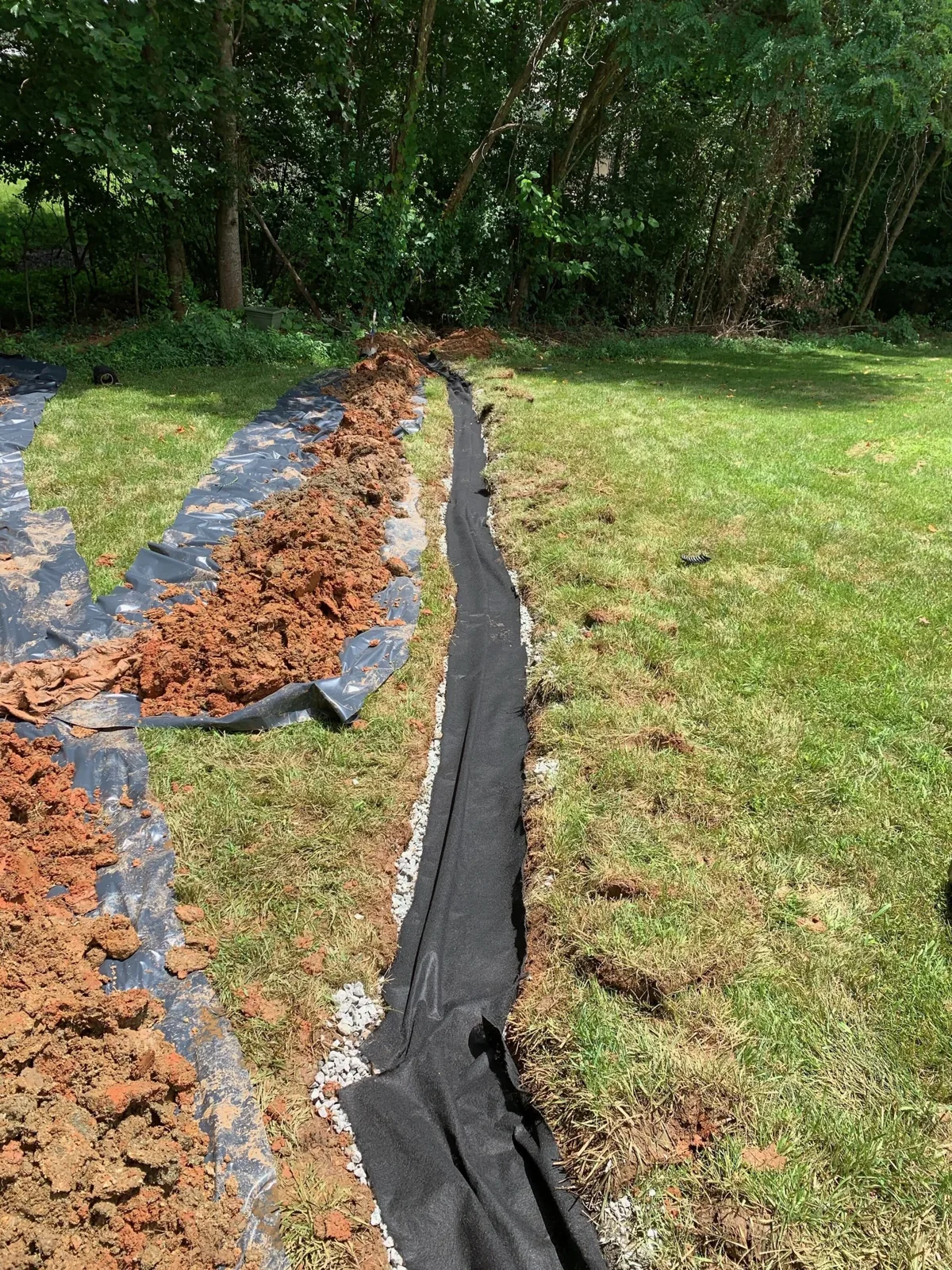
Where exterior waterproofing is recommended, clarify the limits of excavation, utility-location requirements and how nearby surfaces will be protected. Discuss removal and replacement of paving or landscaping before accepting a scope. An estimate should explain the water-management work as well as restoration responsibilities. Do not assume that excavation is necessary for every leak, or that a narrow work area automatically rules out exterior options.
Do not treat grading as unlimited flexibility
Raising soil near a house or cutting a swale changes the relationship between water, the building and adjacent land. Existing siding, openings, trees and property boundaries can constrain an approach. Ask how a proposed grade change will avoid creating another collection point and where runoff ultimately goes. Applicable approvals and utility locations should be checked before digging; this page does not establish project-specific permission or clearance.
Compare interior management with exterior source control
Interior collection may be useful for certain seepage patterns, while an exterior repair may address a particular entry point. Ask what each option accomplishes and what remains outside its scope. If a crack shows movement or a wall is bowing, seek an appropriately qualified structural assessment rather than relying on waterproofing as a structural solution. Call with your Sandy Springs location to confirm service availability and explain access limitations, leak timing and previous repairs.