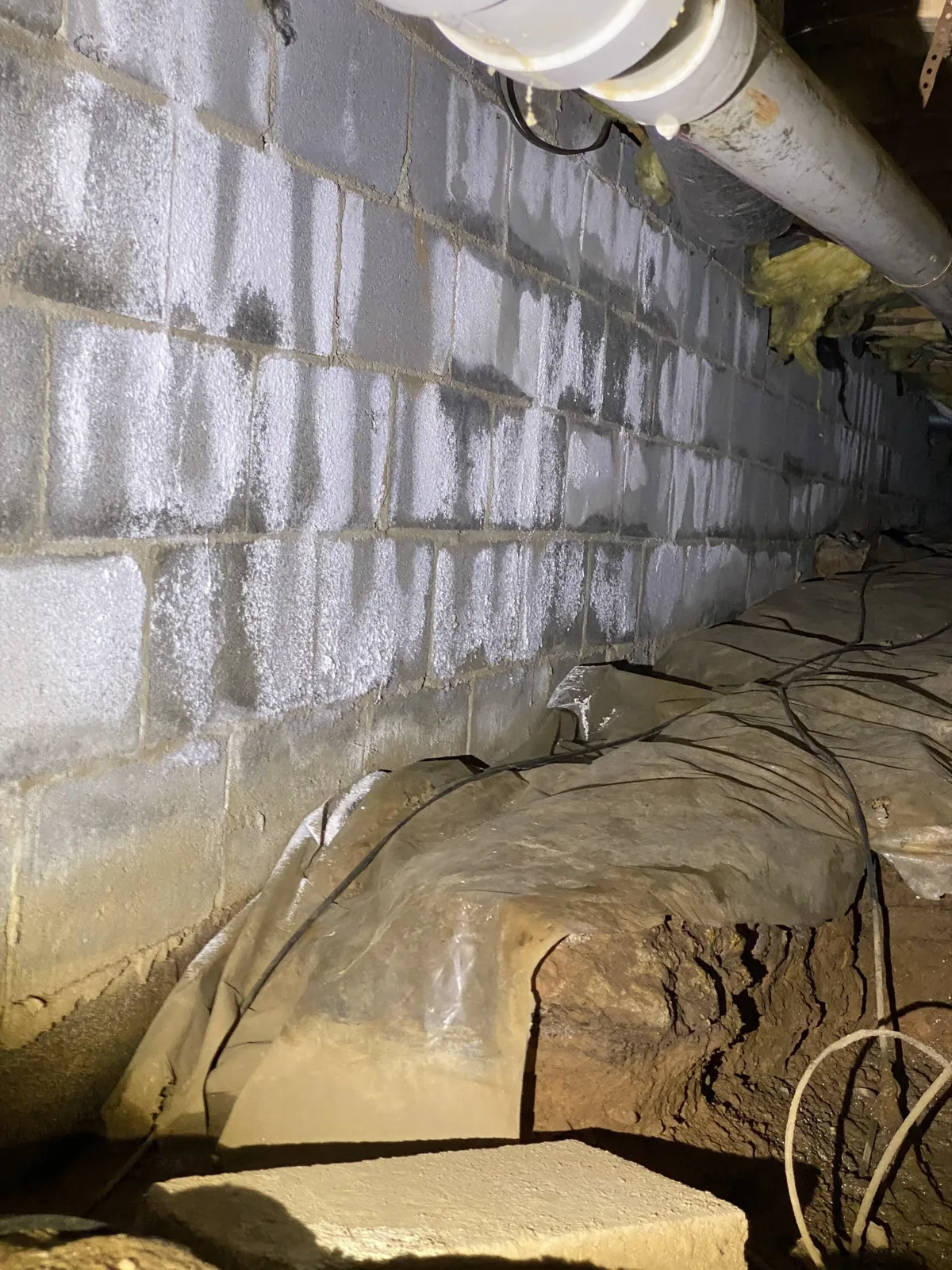
Separate liquid water from humidity
Puddles following rainfall may point to runoff or foundation entry. Damp ground without obvious puddles can still release moisture into the space. Plumbing leaks can add another source. Describing when the problem occurs helps distinguish drainage needs from moisture-management work.
Give incoming water a route out
A crawl space evaluation should consider the surrounding grade, downspout outlets, low areas and foundation penetrations. Depending on conditions, a collection drain, sump pump or exterior correction may be appropriate. Pump discharge should not send water back toward the same foundation.
Address the condition of the space
Fallen insulation, damp materials and visible organic growth deserve attention alongside water entry. The original service offering includes crawl space sanitation and insulation replacement. The extent of cleaning or material removal should be discussed after inspection; simply covering a wet or contaminated area is not a complete solution.
Know what to share on the call
Mention whether there is standing water, an existing pump, a ground cover or a persistent odor upstairs. Describe access limitations and any recent plumbing or gutter work. Avoid entering a flooded or unsafe crawl space just to take pictures.