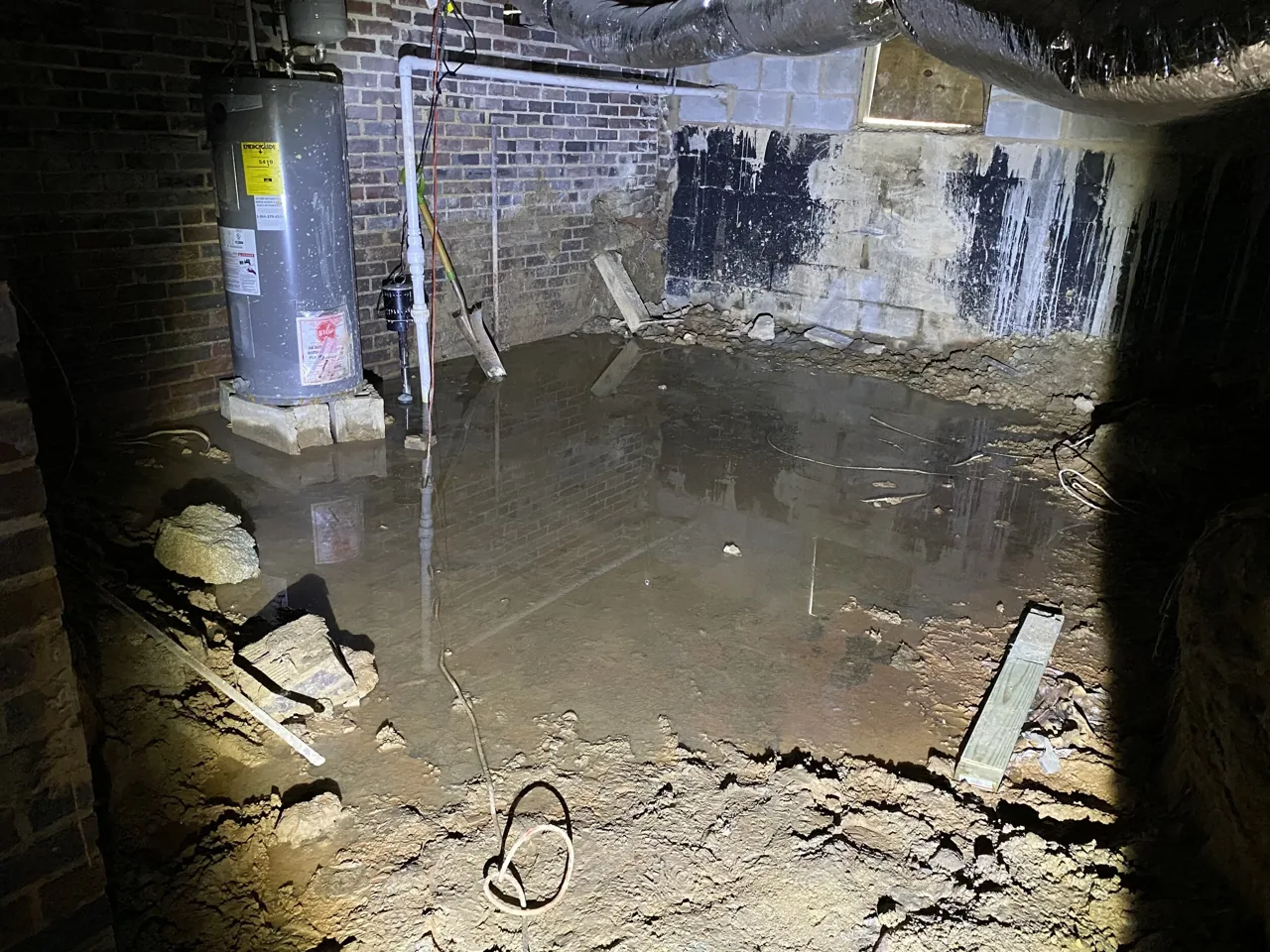
Follow the water before choosing a system
A wet corner after a storm can have a different cause from water rising through a floor crack. Roof runoff, saturated soil, foundation openings and a failed sump pump can all contribute. In Atlanta's clay soils, slow drainage can leave water against below-grade walls long after the rain stops. Note where water first appears and how quickly it recedes.
Interior drainage and sump pump options
An interior collection system can intercept water and direct it to a sump basin. The pump then needs an appropriate discharge route away from the foundation. Existing systems should be checked for blocked lines, basin conditions and pump operation before assuming the entire system needs replacement. Battery backup may be worth discussing where a power outage would leave the basement vulnerable.
Exterior conditions still matter
A basement solution should consider the yard as well as the room. Downspouts that end beside the house, low soil against a wall or a walkout stairwell can concentrate runoff. Exterior drainage or targeted foundation waterproofing may be part of the recommendation; an interior coating alone does not correct every source of water.
Before your evaluation
If it is safe, photograph the first wet area during or immediately after rain. Make a note of any pump noise, power interruption or recent landscaping change. Keep access to foundation walls and the sump clear. Do not enter standing water near electrical equipment; seek qualified help for electrical hazards.