Map the route from the roof to the foundation
Kennesaw is in Cobb County, northwest of Atlanta. That location alone does not identify why a particular house is wet. From a safe, dry position, note which downspouts discharge near the wall, whether a splash block points back toward the house and where runoff first collects. Compare those locations with the first indoor wet spot. A photo of the whole corner is often more useful than a close-up of the final puddle.
An underground pipe is not proof of working drainage
If downspouts connect to buried pipes, identify the outlet before adding another drain. A blocked, damaged or poorly routed line may move water toward the same foundation it is supposed to protect. Ask how the existing route will be checked, whether cleaning access is available and how the proposed discharge avoids neighboring property. Do not open a buried connection or dig around utilities just to prepare for a call.
Match the next step to the space that gets wet
Water along a basement wall-floor joint may need a collection and discharge assessment. Puddles beneath a crawl space call for liquid-water control before ground-cover or insulation work. If the yard is wet but the interior stays dry, an exterior drainage evaluation may be the better starting point. These are different scopes; ask which evidence supports the proposed work rather than choosing a system by name.
Prepare an existing-system checklist
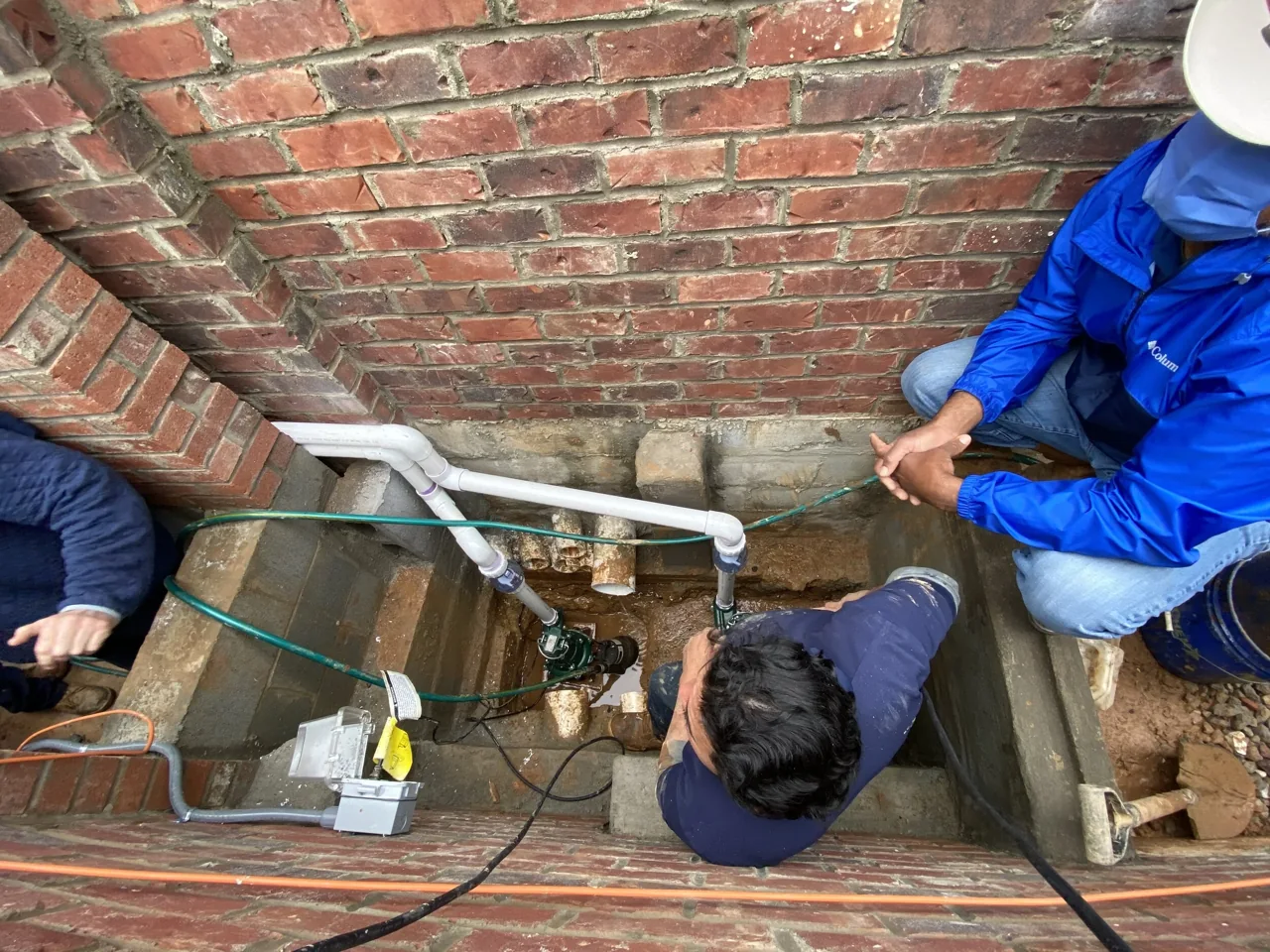
Write down whether there is a sump pump, where its pipe appears to terminate and whether the problem started before or after gutter or landscaping changes. Ask whether the evaluation includes existing equipment, outlet conditions and restoration of disturbed surfaces. Provide your Kennesaw street location or ZIP code by phone to confirm service availability. This page is a planning guide, not confirmation of scheduling or coverage for every address.